
Culinary Notes · On Global Cuisines
World cuisines, with an Indian accent.
Our kitchens cook Indian regional food and the cuisines of the wider world, vegetarian and non-vegetarian alike. The question we are asked most often is how a house in New Delhi cooks a cuisine that belongs somewhere else. The honest answer is that we do not try to copy it. We try to understand it, and then cook it well with what is best here.
A dish travels in two parts: its technique and its ingredients. Technique can be learned and carried anywhere. Ingredients cannot always follow — and one that has travelled badly is worse than a local one at its peak. So we keep the technique faithful and choose the ingredient that is at its best on the day.
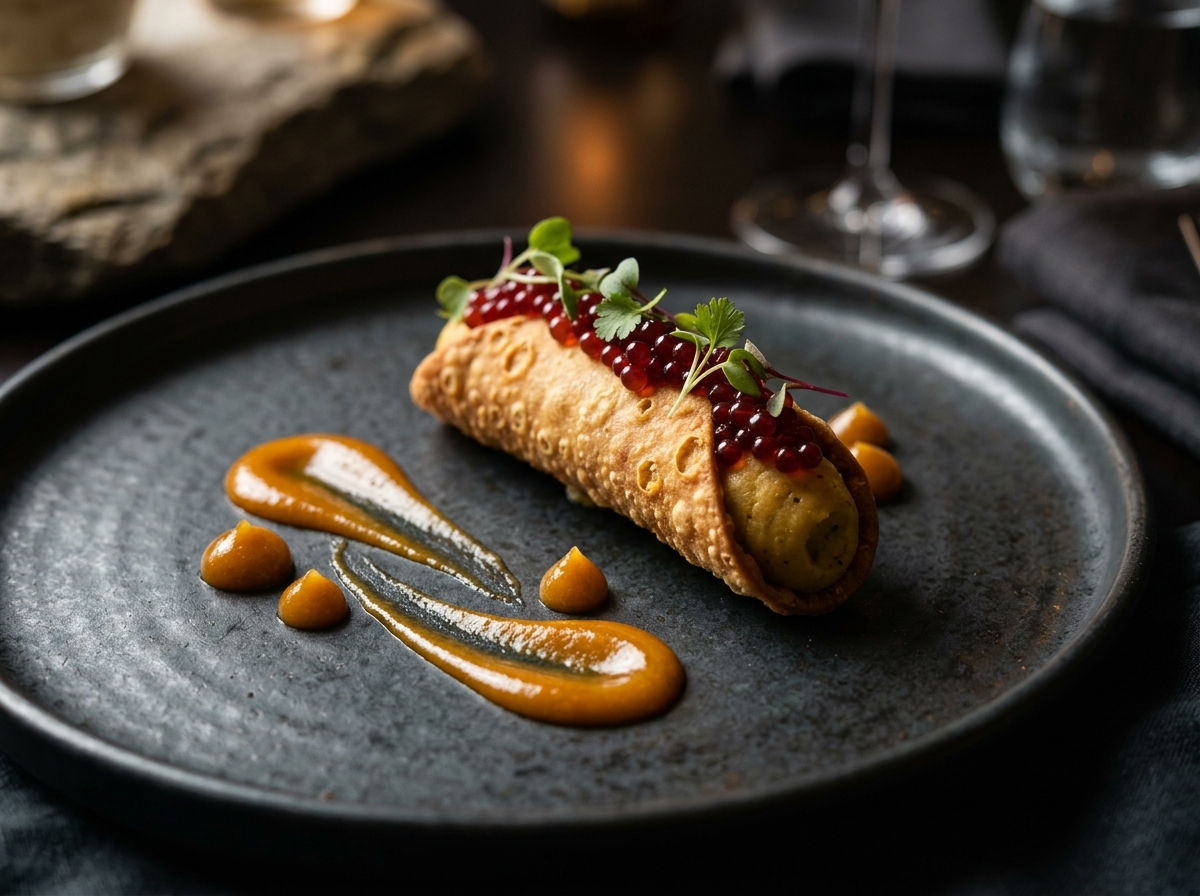
Sometimes the two traditions meet on one plate. Our Pepper Rasam Cannoli takes the form of an Italian cannoli and fills it with spiced potato, over a sambhar gel and rasam caviar. A whole prawn satay is lacquered in peanut sauce and crowned with Thai raw papaya salad. Guava chaat is finished with crisp fried enoki. Tacos arrive with an Indian accent. None of these is fusion for its own sake; each began as a drawing and stayed on the menu only because it tasted right.
The same thinking travels with us. When we cook abroad — in Ibiza, in Phu Quoc, in Bhutan — we work beside the local kitchen and shop from the local market, and bring from home only what cannot be found there. Guests far from India are often moved most by the familiar: the comfort cooking of home, made with precision.
A cuisine adapted with respect is not a lesser version of the original. It is a new dish with an honest address.